
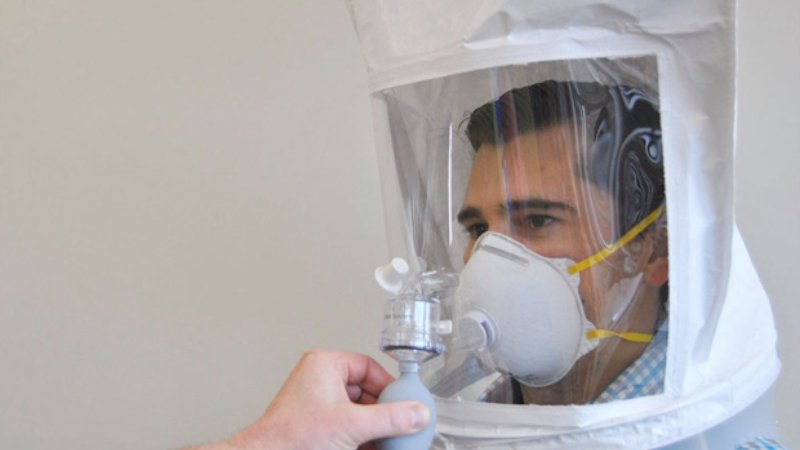
There is Australia is always looking at changes in most of the country’s biggest jobs. Construction, mining, healthcare, manufacturing, etc. looking into how to best keep their workers safe as well as how to keep the workers safe. In the past, a mask fit test was really just a compliance thing. You must get your mask fit test done each year, etc. There is a new outlet on mask fit testing. There is a new thinking on mask fit testing, and it has to do with, not just occupational safety, but sustainability, governance and corporate responsibility.
A new compliance trend in Australia is ISO 14001 consultants. ISO 14001 consultants are thinking of new ways of motivating positive workplace health practices and making it part of new positive environmental and sustainability practices.
Mask Fit Testing as Workforce Sustainability
Work Safe Australia has made it a rule to have mask fit tests done for workers who may work in locations with airborne toxins like silica dust, deadliest of all, asbestos, and for sure, some chemical vapors. Just to be clear, while the law may say that these mask fit tests must be carried out, It should go without saying that there are significant implications at kind of important health and safety practices.
Workforce sustainability is more complex than just some health claims. A poorly conceived and executed protective respiratory program has the potential to create a progressively more widely and seriously ill workforce. An unregulated workforce creates a competitive disadvantage for any business.
ISO 14001 Consultants: Safety and Environmental Responsibility
Australian ISO 14001 consultants understand and appreciate that there are some intersections between environmental management and occupational health practices (OHPs) such as mask fit testing.
Air pollution, dust, and chemicals can be hazards for employees and the community.
Some consultants consider the fit testing of respirators and the ISO 14001 standard together, allowing clients to integrate the care of employees with the care for the environment. For instance, available programs for wearing respirators may also be part of broader dust control, emissions, and sustainability reporting programs. This approach reframes from fit testing to consider how it contributes to the overall environment initiative of the organization, rather than viewing it as just a compliance requirement.
The Australian Context: Rising Expectations
Considering increasing numbers of cases of silicosis, Safe Work Australia has focused on airborne hazards, and especially on silica dust. There have also been regulators and lobbying groups on greater accountability for the environment.
In Australia, the implication of this for organizations is that mask fit testing goes beyond merely complying with WHS requirements, instead, it is part of the growing concern with ESG (Environmental, Social, Governance) accountability. ISO 14001 consultants can integrate respiratory protection into sustainability efforts for Australian businesses.
ESG Reporting and Respiratory Health
Australia is witnessing a rapid increase in ESG reporting that incorporates respiratory health as a part of the social dimension of the framework. Mask fit testing also serves as evidence of the other measurable aspects of employee health.
Consider the ESG reports that will highlight emissions reductions and will also include increased compliance with respiratory fit testing, and dust control initiatives, and will also demonstrate reduced cases of respiratory disease.
The experience of ISO 14001 consultants can be used by firms to incorporate these metrics into their ESG disclosures, thereby increasing their credibility with investors and regulators.
This perspective shifts mask fit testing from just being an act of compliance to being an opportunity under ESG. Businesses that integrate these aspects are front runners in purpose-led business.
Technology and F the Future of Mask Fit Testing
In Australia, mask fit testing is undergoing major changes due to the advancements in technology. Continuous health analytics is enabled by digital fit-test devices, real-time air monitoring, and integrated compliance registers.
ISO 14001 consultants can use these technologies to incorporate respiratory health data into an organisation’s environmental management systems. This creates a system where health metrics of the workplace inform environmental management and the other way around. This is a system that is data-driven and focuses on sustainability.
Practical Implications for Australian Organisations
- Workforce Sustainability: Consider mask fit testing as part of a health plan that is long-term and sustainable.
- Environmental Integration: Integrate respiratory protection with dust control and emissions strategies.
- ESG Credibility: Ensure that the results of mask fit testing are included in the organisation’s ESG reporting frameworks.
- Proactive Governance: Use tech to stop being reactive, and start being proactive with continuous monitoring instead of just periodic testing.
- Cultural Impact: Rather than being a box to tick for compliance, ensure respiratory health is prominent in the organisation’s values.
Conclusion: Focusing on Respiratory Health
Fit testing in Australia is at a turning point. Businesses can either continue to see it as a compliance burden or start to see it as a means of integrating workforce sustainability, environmental stewardship, and ESG leadership into their business processes.
ISO 14001 consultants are demonstrating that in the context of safety, sustainability, and the future of work, respiratory health is more than safeguarding lungs.
The Australian business landscape of the future belongs to those companies that integrate mask fit testing as a business essential, rather than a bureaucratic minimalism.